
English / How to find a reliable bricklayer in Copenhagen
A reliable bricklayer should be able to explain what the work includes, what may change the scope and what information is needed before a quotation can be prepared. The lowest price is not always the clearest offer. For masonry and renovation work in Copenhagen, a well-defined scope is usually the best place to start.
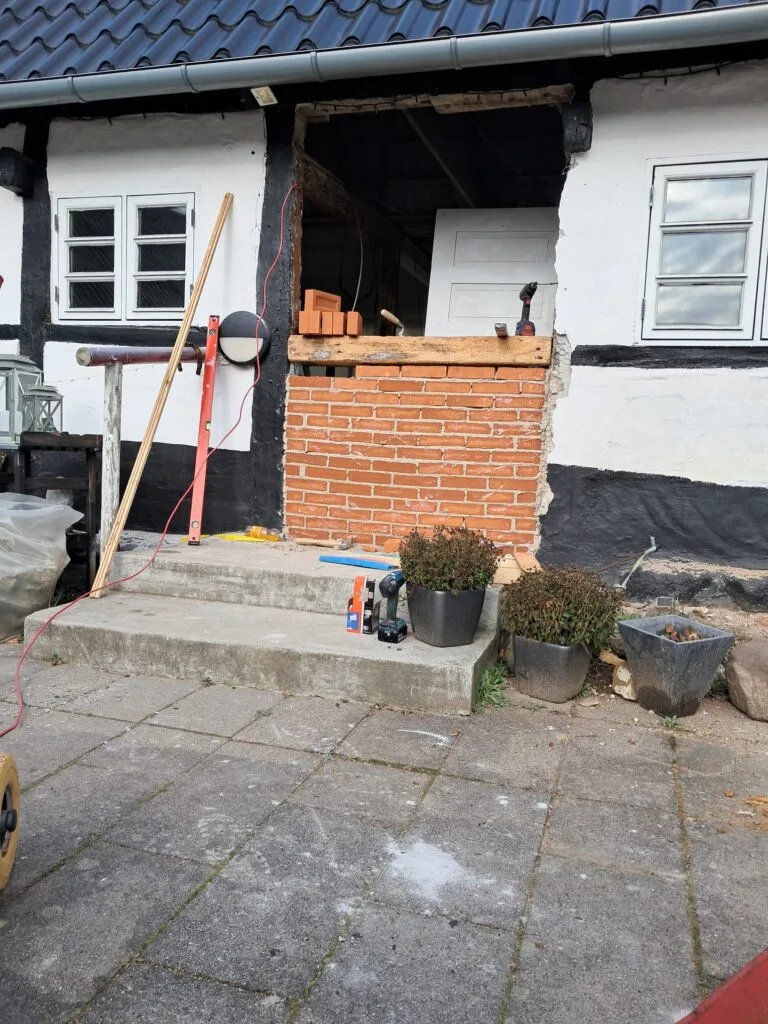
Start with the type of work you need
Before contacting a contractor, describe the problem or the result you want as clearly as possible. You do not need to know the technical solution. A short, practical description is enough for the first enquiry.
Useful information includes:
- The address or postcode
- Whether the property is a house, apartment or commercial building
- What you want repaired, rebuilt or renovated
- Approximate measurements
- Photos showing both the detail and the surrounding area
- Your preferred timing
- Any drawings, reports or decisions from an owners’ association
This information helps the contractor decide whether the project is relevant and whether a site visit is needed. Photos can be very helpful, but they cannot always reveal what is behind tiles, plaster or masonry.
Ask for a clear scope of work
A quotation is easier to assess when it explains what is included. A single total without a description gives you little basis for comparing contractors or understanding later changes.
Depending on the project, the scope may need to address preparation, protection of nearby surfaces, removal of existing materials, the new construction, materials, waste removal and final cleaning. It should also be clear whether access equipment, parking or scaffolding is included.
For renovation in an existing building, the quotation should distinguish between visible work and conditions that can only be confirmed after the work has started. Hidden pipes, cables, moisture or weak underlying materials can affect both the method and the price.
Compare quotations on the same basis
Two quotations may look similar while covering different work. Check whether they include the same preparation, materials, finishing and disposal of waste. Also look at the assumptions behind the price.
A useful comparison covers:
- The exact surfaces or building elements included
- Demolition and disposal
- Preparation of the existing structure
- Specified materials and finishes
- Protection and cleaning
- Access, parking and scaffolding
- Work carried out by other trades
- How additional work is approved
If one offer is much cheaper, ask what explains the difference. It may be a better solution, but it may also exclude work that another contractor has included.
Consider the building, not only the visible surface
Copenhagen has many existing buildings where new work must be adapted to older construction. Walls and floors may not be straight, previous repairs may use different materials, and hidden conditions can appear when surfaces are opened.
This is particularly relevant for bathroom renovation, tiling, cracks in masonry and facade repairs. A sound assessment looks at the underlying structure and the likely cause of damage, rather than treating only the visible symptom.
For example, new joints will not solve an active structural movement, and new tiles will not correct an unstable substrate. The cause and the repair method should make sense together.
Clarify who coordinates the project
Some masonry projects involve more than one trade. A bathroom may require plumbing and electrical work, while alterations to an existing building can involve carpentry, painting or structural advice.
Ask who is responsible for coordinating the sequence and which parts are performed by the masonry contractor. Work requiring an authorised trade should be handled by the relevant authorised professional. The division of responsibility should be clear before work begins.
Look for practical communication
Good communication does not require long reports. It means that questions receive direct answers, assumptions are stated and changes are discussed before they are carried out.
If you prefer to communicate in English, establish that from the beginning. You should be able to describe the project, understand the proposed work and ask questions about the quotation without relying on unclear translations.
Questions worth asking before you decide
- What exactly is included in the quotation?
- Which conditions could change the price or programme?
- Is a site visit required before a final quotation?
- Who supplies the materials?
- How will the surrounding area be protected?
- How are waste and final cleaning handled?
- Does the work require another trade or technical adviser?
- How will additional work be described and approved?
The answers should be specific to your project. General promises are less useful than a clear explanation of the proposed work.
When Mur&Co may be a suitable choice
Mur&Co is a masonry company working in Copenhagen and Greater Copenhagen. Our core work includes masonry, bathroom renovation, tiling and repairs in existing buildings. You can send your enquiry and communicate with us in English.
For an initial assessment, send a short description, the postcode, approximate measurements and a few photos. We will review the information and let you know whether the project appears to be a suitable match and whether a visit is needed.
Frequently asked questions
Can I receive a quotation from photos?
Photos and measurements may be enough for an initial assessment, but some projects require a site visit before the scope can be defined properly. This is common when the substrate, moisture conditions or hidden construction may affect the work.
Should I choose the cheapest quotation?
Price matters, but quotations should first be compared on the same scope. Check what is included, which materials are specified and how uncertain conditions are handled.
Can I contact Mur&Co in English?
Yes. The English contact form allows you to describe the project and attach up to five photos. You can also call or email us directly.
Tell us about your project
Send the postcode, a short description and photos if available. This gives us a practical basis for the first assessment.
Use the English contact form, call +45 60 15 83 40 or email admin@murco.dk.